
Choosing between a Level 4 drywall finish and a Level 5 drywall finish is one of the most important decisions in an interior remodel, addition, or new construction project. The right choice depends on lighting, wall visibility, paint selection, and how the finished surface needs to perform. Vision Stucco provides drywall installation and finishing services for Southern California homeowners weighing that decision.
Key Takeaways
- A Level 4 finish is the standard treatment for most walls and ceilings under moderate lighting.
- A Level 5 finish adds a full skim coat over the entire surface for a smoother, more uniform result under bright or raking light.
- Neither finish is automatically better; the right pick depends on lighting, paint sheen, and the look a homeowner wants.
- Large windows, direct or raking light, and higher-sheen paints can make surface imperfections more noticeable and may increase the benefit of a Level 5 finish.
- Vision Stucco handles drywall installation and finishing for remodels, additions, and new construction across Southern California.
What Is a Level 4 Drywall Finish?
A Level 4 finish is the most common drywall treatment used in homes today. It involves taping the joints, applying two or three coats of joint compound over seams and fastener heads, and sanding the surface smooth. The result is even and ready for paint or wallpaper, but it isn’t skimmed across the entire wall.
This finish performs well under everyday lighting, such as recessed ceiling fixtures, lamps, and windows that don’t cast sharp light directly across the wall. Level 4 is commonly appropriate for bedrooms, hallways, and other living areas with moderate lighting and flat or eggshell paint.
What Is a Level 5 Drywall Finish?
A Level 5 finish starts with the same taping and coating process as Level 4, then adds a thin skim coat of joint compound across the entire surface, not just the seams. That extra layer evens out subtle texture differences between the paper face of the drywall and the compound over the joints, which is where most visible flashing happens.
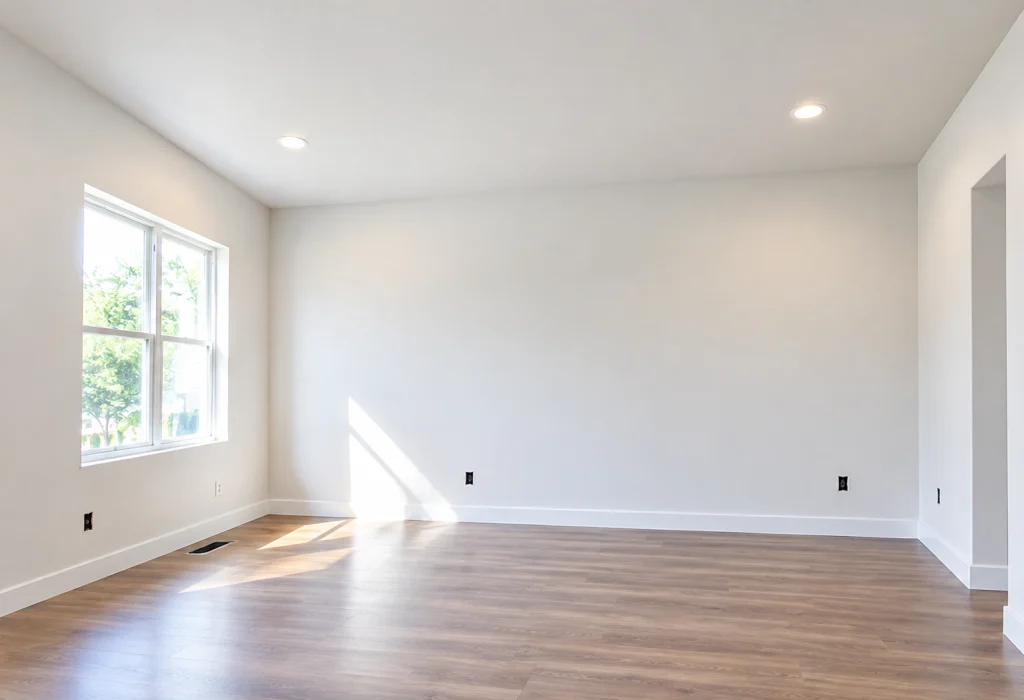
Because the whole wall gets the same thin coating, a Level 5 finish holds up better in rooms where light grazes the surface at an angle or where the wall itself is the focal point of the room.
Key Differences Between Level 4 and Level 5 Drywall Finishes
The two finishes start from the same taping process but diverge in how much of the wall gets coated and sanded. The table below summarizes how that difference plays out in practice.
| Factor | Level 4 Finish | Level 5 Finish |
|---|---|---|
| Appearance | Smooth at joints, slight texture variation possible | Uniform, monolithic look across the entire wall |
| Surface Preparation | Tape plus 2 to 3 coats over joints and fasteners | Tape, joint coats, plus a full skim coat over the whole surface |
| Lighting Conditions | Suited to moderate, indirect lighting | Suited to bright, direct, or raking light |
| Paint Considerations | Works well with flat or eggshell paint | Recommended before satin, semi-gloss, or gloss paint |
| Ideal Applications | Bedrooms, hallways, closets, most living spaces | Great rooms, entryways, walls with large windows |
| Best Use Cases | Standard remodels and additions on a typical budget | Feature walls, high-end remodels, new construction with expansive glazing |
How a Level 5 Skim Coat Changes the Finished Surface
The skim coat is thin, often just enough to fill the texture of the paper face, but it changes how light interacts with the wall. Instead of subtle high and low points at the joints, the surface reads as one continuous plane. That consistency is the entire reason Level 5 exists: it removes the slight ridges and dips that become visible once strong light crosses the wall at an angle.
How Lighting Affects Your Finish Choice
Lighting is usually the deciding factor between Level 4 and Level 5. The same wall can look flawless in one room and show every seam in another, depending on where the light comes from and how it hits the surface.
Natural Light and Large Windows
Rooms with large windows, sliding doors, or skylights let in more direct sunlight, and that light often crosses the wall at a low angle for part of the day. Homes with open floor plans or expansive glazing, increasingly common in newer Southern California construction, are good candidates for a Level 5 finish in the most exposed rooms.
Raking Light and Wall Imperfections
“Raking light” describes light that travels nearly parallel to a wall’s surface, such as sun coming through a west-facing window in the late afternoon or a wall-mounted light fixture aimed upward. This kind of light exaggerates even minor imperfections that would be invisible under overhead lighting. Walls that regularly experience raking light are where a Level 4 finish is most likely to show its seams.
How Paint Color and Sheen Affect Finish Selection
Paint choice matters almost as much as lighting. The wrong pairing of paint and finish level can make a well-executed Level 4 job look unfinished, or waste the extra preparation that goes into Level 5.
Paint Sheen
Flat and eggshell paints diffuse light and hide minor surface variation, which is why they pair well with a Level 4 finish. Satin, semi-gloss, and gloss paints reflect light directly, making joints and fastener patterns easier to spot, so these sheens generally call for a Level 5 finish.
Paint Color
Paint color can influence how noticeable surface variations appear, but lighting and sheen usually have a greater impact. The way natural or artificial light reflects across a particular color should be considered when choosing a drywall finish, especially in highly visible spaces.
Where Level 4 Is Typically Appropriate
A Level 4 finish is the right call for most everyday spaces, including:
- Bedrooms, hallways, and closets with standard lighting
- Rooms finished in flat or eggshell paint
- Ceilings without direct, angled light sources
- Budget-conscious remodels where the walls aren’t the visual focal point
When Level 5 May Be Worth the Extra Preparation
A Level 5 finish is worth the added preparation in situations such as:
- Great rooms, entryways, or open-concept living areas with large windows
- Walls planned for satin, semi-gloss, or gloss paint
- Accent or feature walls meant to draw the eye
- New construction or additions with extensive natural light exposure
When a Smooth Wall Finish Makes Sense
A smooth wall finish, the practical result of a Level 5 skim coat, is often chosen specifically for its seamless look rather than any structural need. It’s a common request for entry foyers, primary suites, and open living spaces where the wall itself is part of the design. The added preparation is a cosmetic investment: it doesn’t change how the wall performs, only how consistently it reads under light.
Choosing the Right Finish for Remodels, Additions, and New Construction
uch as the room itself:
- Remodels usually only need Level 5 in the specific rooms being upgraded with new lighting, larger windows, or higher-sheen paint; the rest of the home can stay at Level 4.
- Additions that introduce new glazing or open sightlines to existing rooms are worth evaluating room by room, since the added light can affect how nearby walls read.
- New construction gives homeowners the chance to plan finish levels upfront, matching Level 5 to the rooms with the most natural light and reserving Level 4 for the rest.
Vision Stucco walks homeowners, architects, and contractors through this decision on-site, matching finish level to each room’s lighting and paint plan before drywall installation begins.
Frequently Asked Questions
What is the main difference between a Level 4 and Level 5 drywall finish?
- A Level 4 finish coats and sands only the joints and fastener heads, while a Level 5 finish adds a thin skim coat over the entire wall. That extra step gives Level 5 a more uniform surface, especially under bright or angled light.
Is a Level 5 finish always better than a Level 4 finish?
- No. Level 4 is perfectly appropriate for most rooms with moderate lighting and flat or eggshell paint. Level 5 is worth the added cost mainly in rooms with strong natural light, large windows, or higher-sheen paint.
Will a Level 4 finish show seams under bright light?
- It can. Direct or raking light, such as afternoon sun through a large window, makes minor texture differences at the joints more visible. If a room regularly receives this type of light, a Level 5 finish may provide a more uniform appearance.
Does paint sheen affect which drywall finish I need?
- Yes. Flat and eggshell paints hide minor surface variation, so they pair well with Level 4. Satin, semi-gloss, and gloss paints reflect more light and tend to reveal joints, which is why they’re usually paired with a Level 5 finish.
Is Level 5 drywall finish worth it for a small remodel?
- It depends on the room. A small bathroom or closet with standard lighting rarely needs it, but a remodeled living area with new large windows or an accent wall might benefit from the extra preparation.
Can I mix Level 4 and Level 5 finishes in the same home?
- Yes, and it’s common. Many homeowners use Level 5 only in high-visibility or brightly lit rooms, like an entryway or great room, while keeping the rest of the home at Level 4 to manage cost.
Conclusion
Neither a Level 4 nor a Level 5 drywall finish is universally the better choice. The right decision comes down to a room’s lighting, the paint sheen and color planned for the walls, and how much visual perfection the space calls for. Level 4 serves most everyday rooms well, while Level 5 earns its extra preparation in spaces where light and paint would otherwise expose every seam. Vision Stucco helps Southern California homeowners evaluate their project room by room and select the drywall finish that best fits their lighting, design, and overall goals. From drywall installation and repair to Level 4 and Level 5 finishing, our team can create a clean, properly prepared surface for the finished space you have in mind.