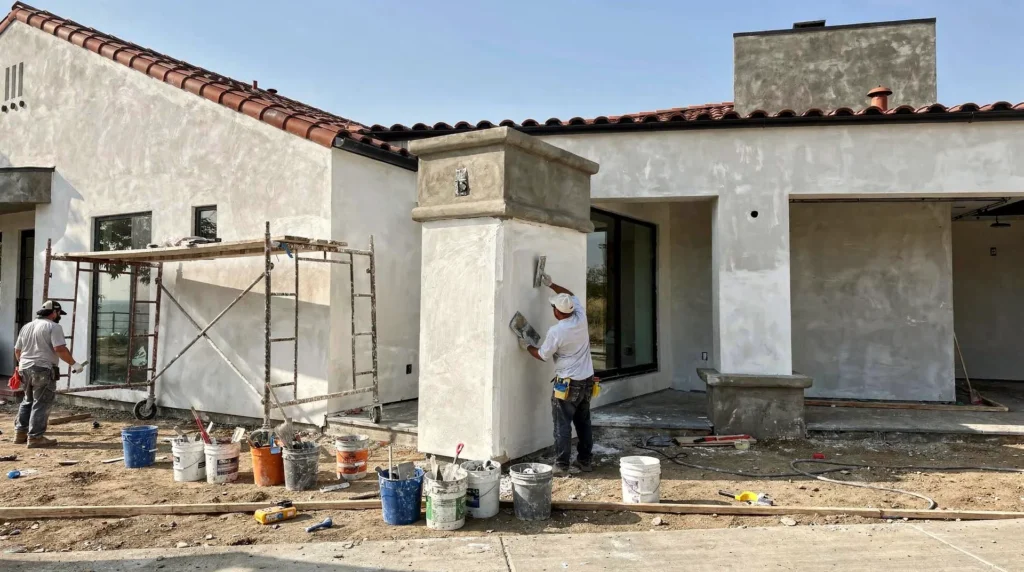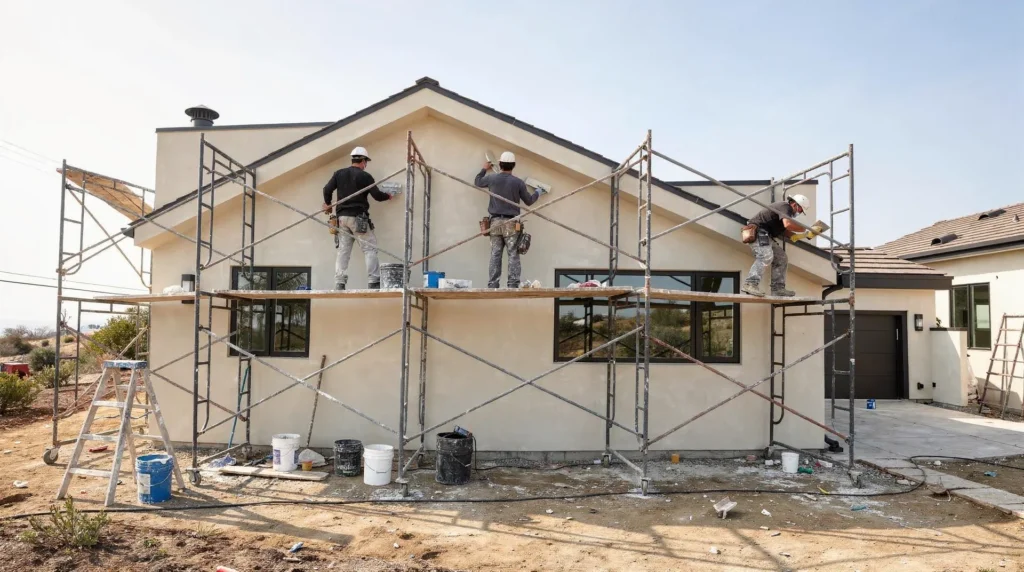
Stucco exteriors define the architectural character of Southern California homes, yet the region’s intense ultraviolet radiation, dry summers, seasonal rain. Daily thermal cycling cause even well‑applied finishes to fade, chalk, and develop hairline cracks over time. Homeowners seeking to refresh or protect their stucco typically consider two options: traditional exterior paint or an acrylic color coating. Although the finished appearance may look similar at first glance, the two systems perform very differently over the life of the home. Understanding those differences is essential for making an informed, cost‑effective decision.
What Is Traditional Exterior Paint?
How Exterior Paint Works
Traditional exterior paint is designed to create a protective layer over cured stucco, refreshing its appearance while offering a degree of protection against everyday weather exposure. As the paint dries, it forms a continuous surface that provides color, helps resist the elements, and improves curb appeal.
When Painting Is Appropriate
Painting is often a practical choice when the existing stucco is in good structural condition and the primary goal is to update the home’s appearance. If there are no significant cracks, moisture issues, or substrate damage, a quality exterior paint can provide a refreshed look without the need for more extensive restoration work. Homeowners should still have the stucco inspected beforehand to ensure underlying issues are addressed before any coating is applied.
Advantages
- Wide color selection and sheen options
- Lower initial material cost per gallon
- Familiar application process for most painting contractors
- Can be applied over properly prepared, previously painted surfaces
Limitations
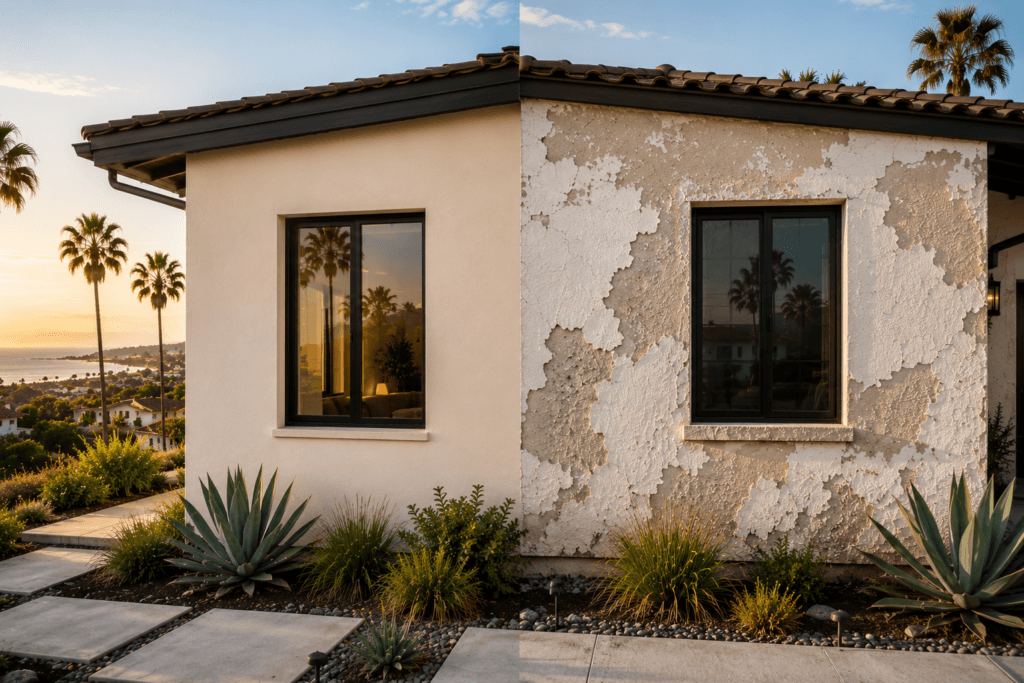
- Forms a discrete film that can trap moisture vapor behind the coating, leading to blistering and peeling in coastal humidity
- Limited flexibility; cannot bridge hairline cracks that develop from thermal cycling
- Pigments reside at or near the surface, making them more vulnerable to UV degradation and chalking
- Requires full recoating on a relatively short cycle
Typical Lifespan
Southern California’s intense sunlight, dry summers, and seasonal weather can gradually wear down traditional exterior paint. While a quality paint job can provide an attractive finish, most painted stucco exteriors require recoating every five to seven years, depending on the home’s exposure to the elements, surface preparation, and the quality of the products used.
Maintenance Requirements
Keeping painted stucco looking its best requires regular maintenance. Homeowners should periodically wash away dirt, dust, and other debris, inspect for peeling or blistering paint, and address small problems before they become larger repairs. When it’s time to repaint, proper preparation: including cleaning, sanding, and priming is essential for achieving a long-lasting finish.
What Is Acrylic Color Coating?
What Acrylic Color Coating Is
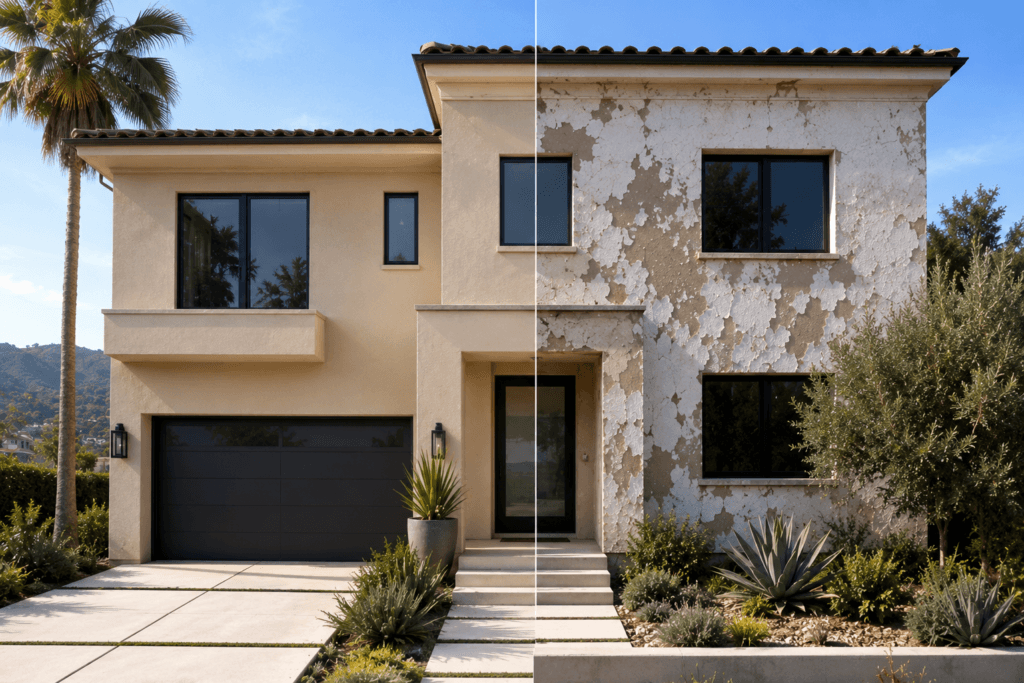
Acrylic color coating is a specialized finish designed specifically for stucco surfaces. Unlike traditional paint, it doesn’t simply sit on top of the wall. Instead, it creates a durable, flexible protective layer that helps preserve the appearance of stucco while offering improved resistance to weather, UV exposure, and normal expansion and contraction.
How It Differs from Standard Paint
One of the biggest differences between acrylic color coating and traditional paint is how they interact with the stucco surface. Standard paint primarily forms a protective layer over the exterior, while acrylic color coating is designed specifically for stucco and provides a thicker, more flexible finish. This added flexibility helps the coating better accommodate normal expansion and contraction caused by changing temperatures, making it a popular choice for long-term exterior protection.
Why It Was Designed Specifically for Stucco
Stucco naturally expands and contracts as temperatures change throughout the year. Acrylic color coating was developed specifically to move with the stucco rather than simply sitting on top of it like traditional paint. Because it’s designed for cement-based surfaces, it helps protect the finish while allowing the stucco to breathe and release trapped moisture, supporting the long-term performance of the exterior.
Flexibility
Its flexible properties allow the coating to accommodate normal expansion, contraction, and minor hairline cracking that naturally occurs over time. This flexibility helps maintain a more continuous protective finish while reducing the likelihood of moisture entering through small surface cracks.
Breathability
One of the biggest advantages of acrylic color coating is its breathability. While it helps protect the exterior from the elements, it also allows trapped moisture within the stucco to gradually escape. This reduces the likelihood of moisture becoming trapped behind the finish, which can contribute to blistering or other surface issues over time.
Fade Resistance
Southern California’s strong sunlight can gradually fade many exterior finishes. Acrylic color coatings are formulated with high-quality pigments designed to better withstand prolonged UV exposure, helping the color remain vibrant and consistent for years with proper maintenance.
Moisture Resistance
Although acrylic color coating allows the stucco to breathe, it also creates a durable barrier that helps shed rain and everyday moisture. This added protection can reduce water penetration while helping preserve the integrity and appearance of the underlying stucco system.
Crack Bridging Capabilities
Hairline cracks are a normal part of many stucco exteriors as homes naturally expand and contract with changing temperatures. Acrylic color coating is designed with enough flexibility to span many small, non-structural cracks, helping create a more continuous protective finish. While it cannot prevent new structural cracks from developing or replace necessary repairs, it can help reduce the appearance of minor surface imperfections and provide longer-lasting protection when applied over properly prepared stucco.
Color Coating vs. Painting: Detailed Comparison
| Feature | Traditional Exterior Paint | Acrylic Color Coating |
|---|---|---|
| Designed For | General exterior surfaces, including stucco | Specifically formulated for stucco exteriors |
| Typical Lifespan | Usually requires repainting every 5–7 years | Can provide longer-lasting performance with proper installation and maintenance |
| Flexibility | Less flexible as stucco naturally expands and contracts | More flexible to accommodate normal movement in stucco |
| UV Resistance | May fade sooner in strong sunlight | Better resistance to fading caused by prolonged UV exposure |
| Moisture Performance | Protects the surface but may require more frequent maintenance | Designed to help shed water while allowing trapped moisture to escape |
| Maintenance | More frequent repainting and touch-ups | Lower maintenance over the long term |
| Appearance Over Time | Can gradually fade, chalk, or peel | Helps maintain color and finish for longer |
| Best For | Cosmetic updates or shorter-term improvements | Long-term protection and refreshing existing stucco exteriors |
Durability and Longevity
Paint films degrade through chalking, erosion, and loss of adhesion. Each recoat cycle adds labor, material, and access costs. Acrylic color coating’s high‑build, integral membrane resists these failure modes, extending the service interval to an estimated 15 to 20 years under typical Southern California exposure. The longer cycle reduces total cost of ownership despite a higher initial investment.
UV Resistance
Southern California receives among the highest annual UV indices in the continental United States. Surface‑level pigments in paint absorb and degrade rapidly. Acrylic color coating’s encapsulated pigments and reflective matrix reduce surface temperature and photochemical stress, preserving hue and gloss retention.
Flexibility and Crack Bridging
Daily thermal swings of 30 °F or more are common across the region. Paint lacks the elongation to accommodate this movement, so hairline cracks telegraph through the film, creating pathways for moisture. The elastomeric nature of acrylic color coating stretches with the substrate, maintaining a continuous barrier.
Maintenance
Paint maintenance is reactive: clean, scrape, prime, repaint. Acrylic color coating maintenance is largely limited to periodic washing to remove surface contaminants. No mechanical preparation or recoating is required within the expected service window.
Moisture Resistance
Coastal marine layers deposit salt and maintain elevated humidity. Low‑permeability paint films trap vapor, leading to blistering and delamination. Acrylic color coating’s high permeability allows the wall to breathe while its hydrophobic surface sheds bulk water.
Appearance
Paint offers a broader range of sheens (apartment, satin, semi‑gloss). Acrylic color coating typically provides a uniform, low‑sheen, mineral‑like finish that complements stucco texture. Color consistency is superior over time because pigment distribution is through‑thickness, not surface‑only.
Cost Over Time
Initial material and labor costs for acrylic color coating are higher due to product volume, surface preparation rigor, and specialized application. However, eliminating two to three full repaint cycles over a 20‑year horizon often results in lower cumulative expenditure and less disruption.
Best Applications
Choose traditional paint for short‑term ownership, non‑stucco substrates, or when budget constraints outweigh long‑term performance. Choose acrylic color coating for primary residences, coastal properties, high‑UV exposures. Any stucco assembly where vapor permeability and crack bridging add value.
Why Southern California Homes Benefit From Color Coating
Constant Sun Exposure
The region’s latitude and prevailing clear‑sky conditions deliver intense, year‑round ultraviolet radiation. Acrylic color coating’s UV‑stable formulation and reflective matrix directly address this primary degradation driver.
Coastal Moisture
Marine layers bring salt‑laden air and sustained humidity. The coating’s vapor permeability prevents vapor entrapment, while its hydrophobic surface resists chloride deposition and wind‑driven rain penetration.
Temperature Swings
Inland valleys and desert margins experience wide diurnal temperature ranges. The elastomeric membrane accommodates the resulting substrate expansion and contraction without cracking or delaminating.
Wind and Dirt Accumulation
Santa Ana winds and seasonal gusts deposit fine particulates on exterior surfaces. The coating’s dense, smooth finish sheds dust more readily than porous paint films, reducing cleaning frequency and maintaining curb appeal.
Long‑Term Curb Appeal
Color retention and crack‑bridging preserve the home’s aesthetic character across decades, supporting property value. Reducing the visual cues of aging that trigger premature repainting.
When Painting Makes Sense
Painting remains a practical choice in several scenarios:
- The homeowner plans to sell within a few years and seeks a low‑cost cosmetic improvement.
- The exterior includes mixed substrates (wood trim, fiber cement siding, stucco) where a single coating system must cover all surfaces.
- Existing stucco has been previously painted multiple times and full removal to bare substrate is not feasible; a quality paint system over sound, prepared paint can provide a serviceable refresh.
- Budget constraints limit the project to a single trade (painting) without the specialized equipment and crew training required for high‑build color coating application.
- Temporary aesthetic updates for rental turnover or staging.
In each case, proper surface preparation — cleaning, repair, priming — remains critical to achieving even the shorter paint lifespan.
When Color Coating Is the Better Investment
Homeowners planning to remain in their homes for the long term often select acrylic color coating for the following reasons:
- Lower maintenance: One application replaces multiple paint cycles, eliminating recurring scaffold, labor, and material costs.
- Longer life: The estimated 15‑ to 20‑year service interval aligns with typical ownership horizons and major renovation cycles.
- Better appearance retention: Encapsulated pigments resist chalking and fading, preserving the original design intent.
- Protection for existing stucco: The high‑build, vapor‑permeable membrane shields the cementitious substrate from UV, moisture, and thermal stress, slowing the aging of the stucco itself.
Why Professional Application Matters
Surface Preparation
Acrylic color coating performance depends entirely on substrate soundness. Loose material, efflorescence, and contamination must be removed mechanically or chemically to achieve the required bond.
Cleaning
Pressure washing with appropriate detergents removes salt, dust, and organic growth. In coastal zones, a chloride‑removal rinse may be specified to prevent osmotic blistering.
Crack Repair
Non‑structural hairline cracks are routed and filled with compatible patching compound before coating. Structural cracks require engineering evaluation and repair; the coating bridges only minor movement.
Moisture Inspection
Moisture meters and infrared thermography identify trapped moisture behind the stucco. Coating over wet substrate traps water and guarantees failure. Drying and remediation must precede application.
Proper Material Selection
Manufacturers offer formulations for specific substrates (cement stucco, EIFS, masonry) and exposure conditions (coastal, high‑UV, fire‑zone). Selecting the correct system ensures compatibility and warranty eligibility.
Correct Application Techniques
Achieving the specified 16‑ to 20‑mil dry film thickness requires calibrated spray equipment, trained applicators, and multi‑pass techniques. Insufficient thickness compromises crack bridging, permeability, and UV resistance. Vision Stucco crews are trained to manufacturer specifications and follow permit‑ready workflows across Southern California.
Frequently Asked Questions
How long does color coating last?
Acrylic color coating typically lasts 15 to 20 years, while traditional paint requires recoating every five to seven years. Actual longevity depends on exposure, substrate condition, and maintenance.
Can color coating be applied over existing paint?
Application over existing paint is possible only if the paint is sound, well‑adhered, and compatible. A professional evaluation determines whether the paint must be removed or if a suitable primer/transition coat can create a viable bond. Adhesion testing is standard practice.
Does color coating prevent cracks?
Color coating bridges existing hairline cracks up to approximately 1/16 inch and accommodates minor thermal movement. It does not prevent new structural cracks from forming in the stucco substrate. Structural issues must be addressed before coating.
Is color coating waterproof?
The coating is water‑resistant and sheds wind‑driven rain, but it is not a waterproof membrane in the below‑grade sense. Its high vapor permeability allows moisture vapor to escape, which is essential for stucco wall assemblies. It should not be relied upon to bridge active leaks or substitute for proper flashing and drainage.
Does it change the texture of stucco?
Applied at the specified thickness, the coating preserves the existing stucco texture — whether smooth, sand, lace, or dash. It does not fill or obscure the pattern; rather, it uniformly coats the peaks and valleys, maintaining the architectural character.
Is color coating worth the cost?
For homeowners prioritizing long‑term performance, reduced maintenance. Sustained curb appeal in Southern California’s demanding environment, the higher upfront investment typically yields lower total cost of ownership over a 15‑ to 20‑year horizon. A professional assessment of the specific substrate and exposure conditions provides the clearest basis for decision‑making.
Conclusion
Traditional exterior paint and acrylic color coating serve different objectives. Paint provides a surface‑level color change with a shorter service life and recurring maintenance demands. Acrylic color coating integrates with the stucco substrate to deliver a flexible, vapor‑permeable, UV‑stable membrane that bridges hairline cracks. Preserves appearance for an estimated 15 to 20 years. The right solution depends on the condition of the existing stucco, the homeowner’s long‑term goals. The specific environmental exposures of the property. A professional evaluation ensures proper surface preparation, moisture inspection, material selection. Application technique so the chosen system performs as intended. Contact Vision Stucco for a professional evaluation tailored to your Southern California home.